


A couple things happened this past week that got me thinking it might be a good idea to talk about landscape photography and choice of focal length.
1. I read “What’s Your Favorite Focal Length?” by Brian Auer
I found the question that Brian posed to be a bid odd and never made a poll selection on his blog entry. The question of what your favorite focal length isn’t really relevant, just as asking what is your favorite color to photograph. If curious you can see my full comment in the link above. In short choice of focal length should be determined by your subject and the visual effects/qualities that you would like present in your image.
2. I received an email asking me, “What lens do you use for your landscape photographs?”
Seeing as how the question was quite straight forward, I thought my answer might be worth sharing albeit in a bit more verbose form.
The great thing about landscape photography is that you can creatively take photographs with a variety of lenses and focal lengths. For the sake of this discussion we’ll talk in terms of 35mm photography. Each lens, whether fish-eye, ultra-wide or telephoto, have different optical properties that will yield a unique look to your subject.
I don’t have a favorite focal length and have learned from experimentation and some reading what effects are produced by which lens type. The results are of course quite subjective. Each lens type has its sweet spot of use, but even still a little experimentation might just reveal something new so there are no hard and fast rules with using a particular lens.
Fish-Eye (15mm)
Fish-eye lenses
1. They take in a very wide angle of view often 180º
2. They have a very short focal distance allowing you to get with in inches of your subject
The most distinctive visual quality provided by these types of lenses that viewers notice is the distorted perspective, namely barrel distortion. Distortion is something photographers either love or hate. I love distortion and the effect it brings to my photography. For those that don’t like the distortion you can use a fish-eye to get the wide field of view and then run 3rd party software applications like Optics Pro Elite v4.5 Software
One of the biggest challenges in using a fish-eye lens is keeping unwanted elements out of your image. This can include people or objects on the periphery of the scene you’re photographing. Even your feet can get in the field of view. A lot of people I know often use this lens while laying down. Shooting with this lens is a different experience.
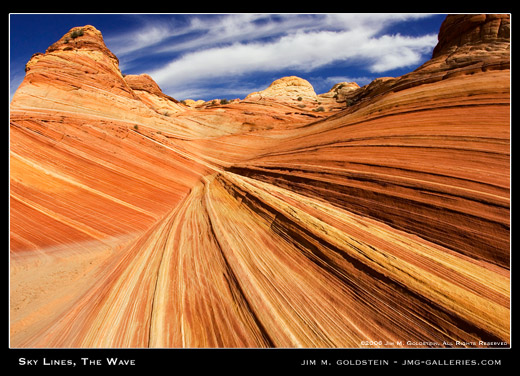
Ultra-Wide Zoom (16mm)
Ultra-wide zoom lenses
The lens I use is a Canon 16-35mm lens
The downside to ultra-wide lenses are that they do show signs of vignetting. This is most noticeable when using a filter in combination with use at the widest focal lengths. Vignetting appears most visibly with full frame sensor cameras. Cameras that have a magnification factor (non-full frame sensor cameras) often avoid the effects of vignetting as the project image falls outside of the sensors range of detection.
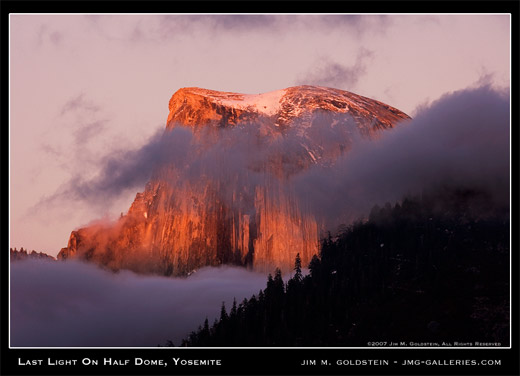
Telephoto (200mm)
It might surprise people to know that some of the best landscape photos can be obtained with longer focal lengths provided by telephoto lenses
Telephoto lenses
One other impact on images taken with telephoto lenses is the longer focal lengths narrow the depth of field. This requires a more precise placement of focus on your subject that you feel is most important.
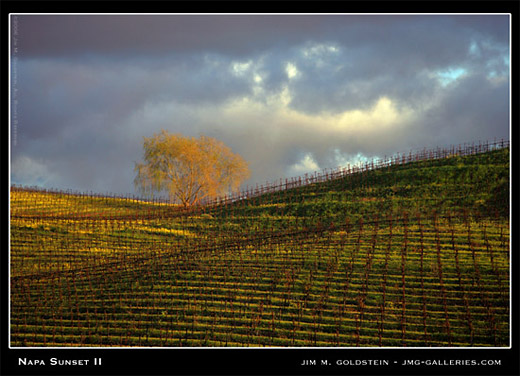
Super-Telephoto (1200mm)
Super-telephoto lenses
Tilt-Shift (24 mm, 45 mm, 90 mm)
Tilt-shift lenses
Another added benefit of tilt-shift lenses is their ability to provide an alternate method of creating panoramic photos. The tilt-shift capabilities allows you to keep your camera in one position while you shift the visible scene across your sensor. In a nutshell its like panning without ever moving your camera. The big bonus with this technique is that there is no introduction of parallax distortion making for a simplified means of capturing and post-processing panoramic photos.
—
That covers the range of focal lengths and lenses I use. I hope the information comes in handy and allows you to expand the range of your photographic work. If I’ve left anything out that you’d like me to expand on don’t hesitate to add your comment to this blog entry or contact me directly.
[tags]landscape, photography, lens, photo, terminology, fish-eye, super-wide, telephoto, super tele-photo, tilt-shift, zoom, question[/tags]
Great post, Jim! When I saw its title I thought, oh, he might be running a poll, in which case my answer is easy: all of my lenses. 🙂
It really all gets back to one simple answer that we all need to ask ourselves before we take the photo:
– What do I want to capture in the photograph?
Once we answer that question, we know what lens we want to use, and if we’ve done our homework and learned about our cameras and photography in general, we’ll also know what else we need to do to get what we want. And I might add that we’ll also know what to do to compensate for the fact that the lighting might be poor, or we might not have just the lens we want with us, etc.
Great post, Jim.
Sometimes it does pay to know what focal lengths you tend to favor – especially if you can’t bring everything along. My favorites vary depending upon subject, but I find that I like the wide to normal end for many of my landscape photographs.
Since I do a lot of photography on foot – backpacking and urban/outdoor hiking – I don’t want to carry a ton of lenses. Knowing what I’m likely to shoot and how I’ll approach these subjects, I’ve found that I can do quite well with a minimum kit of 5D, 17-40, and 24-105 on back-country adventures. I just returned from a 6-day pack trip in the eastern Sierra, and I didn’t miss the longer lenses at all.
My point isn’t that, for example, wide is better than telephoto. Rather, it is that having preferences and knowing what they are can be OK and can even have practical benefits in terms of simplification.
Keep up the great work on this site!
Dan
I’ll admit to being surprised that you use telephoto lenses for some of your landscapes, but it makes sense when I look at some of your work.
I expected that most landscape work was done with wide angle, fish-eye, and standard zooms, maxing out at about 85mm.
I think I’ve settled on the Canon 17-40mm as my lens of choice for my upcoming foray into landscape photography. I’d love to try Dan’s kit of that lens and the 24-105, but I just can’t afford the weekly rental costs on two lenses.
Jim I think you covered it! I have to agree with you that I don’t have a “favorite” lens. The lens is simply a tool like a paint brush. I use it to capture what I have visualized in my mind. So my favorite lens is the one that gets me closest to my visualization. Thank you for speaking about the creative side of photography, it really is more important than the gear.
I’m with you there Jim. If there is a potential photo developing then you should use whatever is needed in order to get it. Not every landscape involves big foreground small background though that is a commonly used composition technique.
I must say that I do have a favorite. Now, maybe it’s because it’s my fastest lens. I don’t know. What I do know is that I love shooting with it; its my Sigma 30mm f1.4.
One thing is for sure, it has forced me to be a better photographer. I find that I’m forced to get a little closer and that makes me more aware of the essentials.
Trevor, that is the philosophy I have regarding telephoto wildlife photography. Most of the 600mm photos tend to be too safe for my tastes. Very cute, portraity but almost never memorable because anybody can open up wide and take a snapshot of a perched bird. For the same photographer to take that lens away I am convinced would become a better photographer not because their equipment would be better, but because they’d be forced to work the scene harder.
Thanks for all the great feedback!
Lens use/preference is going to be different for each photographer. My goal was to point out that choice of lens and focal length is itself a creative choice. Learning what characteristics each lens provides offers yet another creative dimension one can bring to your work. Often I think focal length and lens characteristics are taken for granted.
There definitely isn’t anything wrong with identifying a lens or focal length that you prefer using more than another, but I’d hope that others avoid falling into a rut of using a lens the same way over and over. Variety is the spice of life and pushing yourself to try new things with the same lens or picking up a new lens to experiment with might just get your creative juices flowing.
It’s all about having discovery and hopefully fun.
Jim
I own a 12-24 that almost never leaves the camera when I’m shooting landscapes. With the 1.5 “crop factor” from the digital sensor, I find the range I get to be ideal for that type of photography.
Your posts are always a nice read, thanks!
I don’t have a particular favorite either, because I tend to use my entire arsenal of lenses when it comes to landscapes. It really depends on the situation. Although I tend to probably use my 12-24 more often, it isn’t unusual for me to grab my 70-200 f2.8 or even my 500mm.
One of the problems I sometimes face is that I want to photograph a scene so many different ways, with different lenses, but the light is changing faster than I can change lenses!
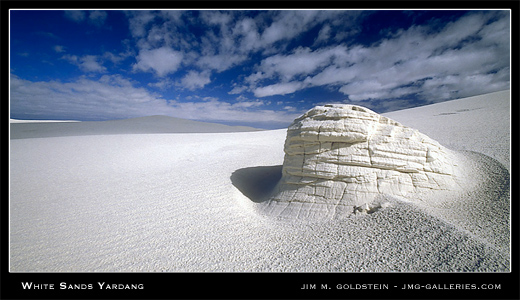
BTW – I love the white sands shot!
Mark changing light is always a challenge. I suppose thats where having the ability to envision the various outcomes of using specific lenses helps prioritize different shots. It’s a tough thing to do, but aside from cloning oneself prioritizing is the only option.
Thanks for the comment and I’m glad you liked the White Sands photo. It’s one of my favorites.
Jim,
Great writing about lenses. I really enjoy all my lenses. I try to avoid favorites because they each individually do such different things.
Lately I am trying to justify my fisheye because I use it pretty sporadically. We will see how it fares on my next 2 week photo trip.
Usually I shoot with everything, but tend to settle in on a certain lens or two in different places based on what is there.
Thanks for writing!
The three that I use are the 20mm, 40mm & the 85mm lenses. All three are fast lenses which I like.